Category: Commercial / Property Management A guest may never walk past your dumpster pad. But they can see the rear entrance from the parking lot, notice an odor near the buildi…
Planning a project?
If this note is part of a larger maintenance plan, share the property details with BV PowerWashing.
The Part of Your Restaurant Customers Never See (But Health Inspectors and Pests Do): Why Dumpster Pad Cleaning Matters

Category: Commercial / Property Management
A guest may never walk past your dumpster pad. But they can see the rear entrance from the parking lot, notice an odor near the building, or spot pests around the property. Inspectors may also pay attention to the condition of waste-storage areas.
A greasy, stained pad can undermine the impression your restaurant works hard to build. It can also create avoidable sanitation and pest-control concerns. Professional dumpster pad cleaning helps restore the concrete, reduce grease buildup, and keep the back-of-house area ready for daily operations.
Blackstone Valley Power Washing is veteran-owned and fully insured. Our commercial team uses professional hot-water equipment, including 8 GPM commercial equipment, and eco-friendly, plant-safe detergents. Our standard is simple: “When It’s Got To Be Clean!”

The problem: grease, odor, and a poor first impression
Restaurant waste areas take a daily beating. Bags leak. Food residue spills. Cooking grease and oily runoff build up on porous concrete. Rain and foot traffic can spread the mess beyond the dumpster enclosure.
Over time, that buildup can leave:
- Sticky, slippery concrete around bins and grease receptacles
- Persistent odors that reach staff, delivery drivers, or nearby customers
- Food residue and standing liquid that can attract flies and other pests
- A stained, neglected-looking rear entrance that reflects poorly on the business
A clean front entrance matters. So does the route used by employees, deliveries, and waste haulers. The dumpster pad is part of your working property, and protecting it is part of protecting your restaurant’s appearance and value.
Health-inspection expectations: cleanliness is ongoing
A professional cleaning is useful, but it does not replace daily housekeeping or your food-safety responsibilities. Under the FDA Food Code, physical facilities should be cleaned as often as necessary to keep them clean, and pest harborage conditions should be eliminated. See the FDA Food Code physical-facilities chapter.
Massachusetts has a specific rule for waste-storage areas. 105 CMR 450.372 says each container, room, or area used to store garbage or rubbish must be thoroughly cleaned after each emptying or removal. It also specifies suitable washing equipment, including hot water and detergent. Read 105 CMR 450.372.
That is not a promise that any one cleaning schedule will satisfy every inspector or local requirement. Conditions differ by site, and local authorities may have additional expectations. Keep up with spills and routine cleaning, and ask your local health department about requirements for your operation.
The solution: professional hot-water grease pad cleaning
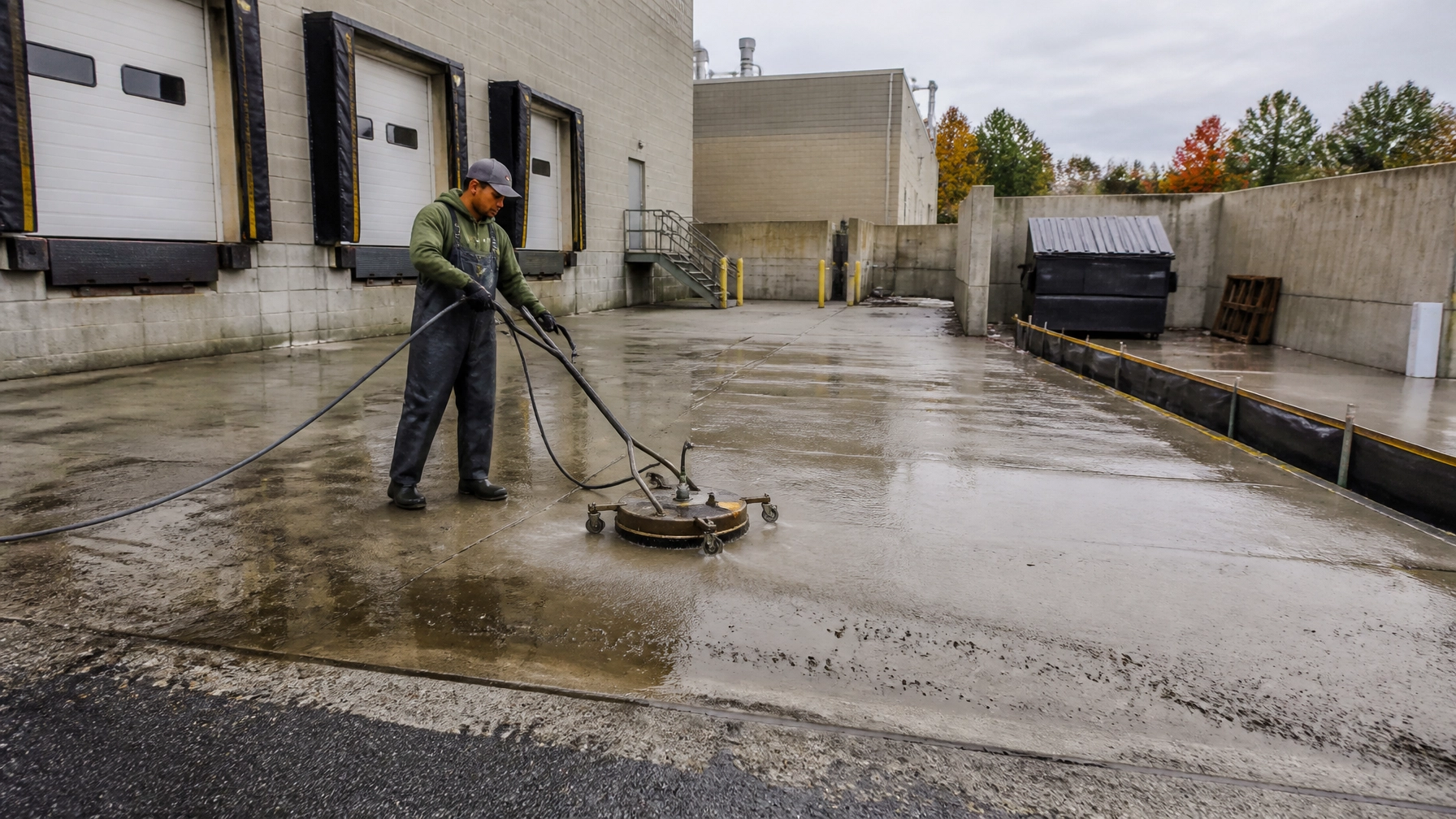
Cold rinsing alone may shift surface dirt without removing bonded grease. Professional hot-water degreasing combines heat, appropriate detergent, and controlled cleaning to loosen residue from concrete and lift grime from the surface.
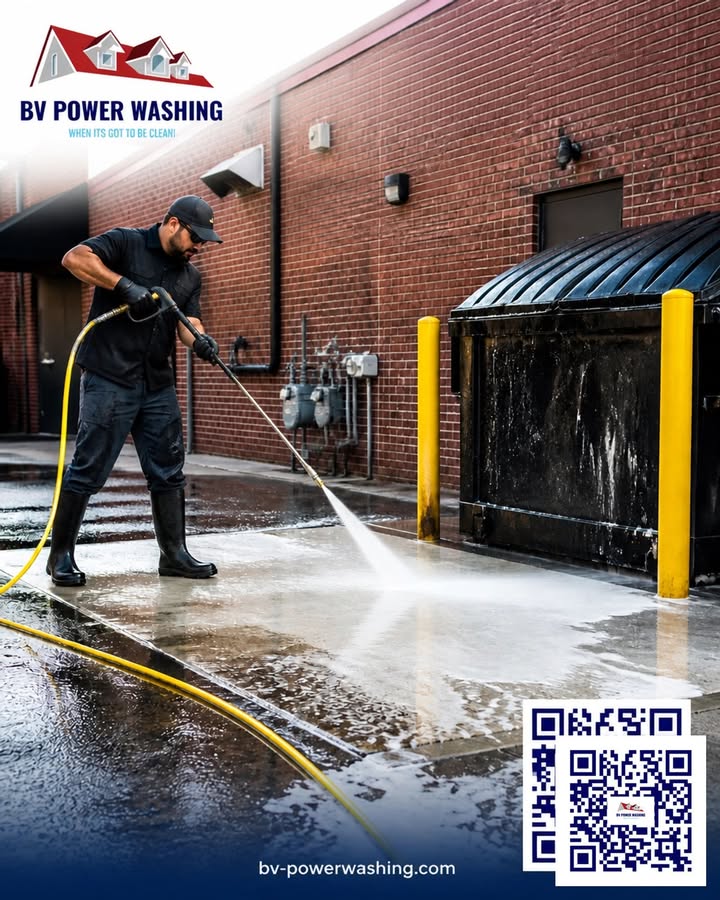
Our restaurant pressure washing process is straightforward:
- Review the site and scope. We identify the pad, nearby entrances, walls, bins, drains, and any areas that need protection. We discuss scheduling around deliveries and business hours.
- Prepare the work area. Loose debris is removed, and nearby surfaces are protected as needed. We plan the cleaning to limit disruption to staff and operations.
- Apply suitable detergent and hot water. Plant-safe detergent is selected for the surface and soil. Hot water helps loosen grease and embedded residue.
- Clean and rinse with control. We work across the concrete pad and the agreed scope, then manage rinse water responsibly. Wash water should not be allowed to carry grease into a storm drain or toward food-preparation areas; disposal must follow applicable local requirements.
- Check the result. We review the cleaned surface and surrounding work area before wrapping up.
The goal is concrete that looks brighter and feels cleaner, not a quick rinse that leaves greasy residue behind. Every property is different, so the service plan and final results depend on the surface, buildup, access, and site conditions.
How often should a restaurant clean its dumpster pad?
There is no single interval that fits every restaurant. A high-volume kitchen with fryers, frequent pickups, or recurring leaks will usually need more attention than a low-volume operation with well-managed waste storage.
Use this practical starting point:
- Inspect the pad and enclosure daily. Look for leaks, spilled waste, standing water, odors, pests, and overflowing or open containers.
- Clean spills promptly. Do not wait for a scheduled service if grease or food waste has spread across the pad.
- Coordinate cleaning with waste removal. In Massachusetts, the state rule calls for cleaning the garbage-storage container, room, or area after each emptying or removal.
- Schedule professional deep cleaning based on actual buildup. Some sites may need frequent degreasing; others may need it less often. Increase frequency if stains, odors, slippery areas, or pest activity return between visits.
- Keep a simple service record. Note inspection dates, corrective cleaning, waste pickups, and pest-control follow-up.
A recurring commercial cleaning plan can make the work easier to budget and schedule. We’ll discuss the site, access, and requested scope before work begins, so you know what is included and can plan around your operation.
A cleaner pad protects more than appearances
Routine dumpster pad cleaning supports a better-maintained property. It helps reduce visible grease and residue, improves the appearance of the service entrance, and makes it easier to spot new leaks or waste-handling problems early.
That matters for restaurant owners and property managers who are responsible for more than one surface. Blackstone Valley Power Washing also provides commercial exterior cleaning, including concrete and other hard-working exterior areas. Our commercial quote page is the simplest next step to discuss a one-time cleanup or recurring service.
We serve commercial properties in and around Milford, including Uxbridge, Millbury, Sutton, Grafton, Northbridge, Whitinsville, Douglas, Upton, Blackstone, Mendon, Holliston, Hopkinton, Medway, Millis, Franklin, Bellingham, and Hopedale. Our Northern Rhode Island service area includes Woonsocket, Cumberland, North Smithfield, and Lincoln. Check our service-area page or call to confirm availability for your address.
Frequently asked questions
Does pressure washing eliminate pests?
No. Cleaning removes residue and may reduce food sources and harborage conditions, but it does not replace pest-control services, covered containers, prompt waste handling, or routine inspections. If you see pest activity, contact your pest-control provider and address the conditions attracting pests.
Is cold-water washing enough for a greasy dumpster pad?
It may remove some loose dirt, but heavy or bonded grease often needs a more deliberate degreasing process. Hot water and suitable detergent help loosen buildup so it can be cleaned more effectively.
Can you clean during business hours?
Scheduling depends on the site and requested scope. We can discuss a time that works around deliveries, staff access, and restaurant operations. The area will need to be kept clear while work is underway.
How do I request service?
Call 508-277-8813 or request a commercial cleaning quote. We’ll talk through the property, the condition of the pad, access, and the work you want done.
Simple. Clean. Done. Restore the area behind your restaurant with professional dumpster pad cleaning from Blackstone Valley Power Washing. When it’s got to be clean, let’s get the right scope on the schedule.
A practical next step
Want a clear plan for your property?
Keep reading